TL;DR: A musty smell in a Bakersfield house almost always means water is sitting somewhere it shouldn’t, not that the air itself is “moldy.” In this dry climate the usual culprits are a leaking swamp cooler, a clogged AC condensate line, a slab leak, or a slow drip under a sink or water heater. Check those sources yourself first. If the smell persists after you’ve dried what you can find, or you can’t locate a source, call a mold inspection company to find and document the moisture, not a store-bought test kit.
If you’ve walked into a room in Oleander or Westchester and caught that damp, earthy smell that wasn’t there last month, your first instinct might be to blame “mold in the air.” In a Central Valley climate this dry, that’s backwards. Bakersfield gets so little ambient humidity that mold growth almost never happens from the air alone. It happens because water got into the house somewhere, through a roof leak, a cracked slab, or a drip line, and it’s been sitting long enough to start smelling.
What does a musty smell in a Bakersfield home actually mean?
A musty smell means organic material, usually wood, drywall paper, or carpet backing, has been wet long enough for mold or bacteria to start breaking it down. That process can start within 24 to 48 hours of a material getting wet, according to the EPA.
In Bakersfield’s slab-on-grade housing stock, the water usually isn’t obvious. A slab leak can run under a kitchen or hallway for weeks before anyone notices a warm spot on the floor or a spike in the water bill. An evaporative cooler pad that wasn’t replaced this season can drip through the roof deck into an attic all summer. An AC condensate line that clogs in July backs up into a closet ceiling and nobody looks up until the smell shows up. None of these leave standing water you’d trip over. They just leave a smell.
What can you check safely before calling anyone?
You can rule out the most common Bakersfield sources yourself in about 15 minutes, without opening any walls. Start with anything that uses or moves water.
- Swamp cooler: check the pads for slime or standing water in the pan, and look at the ceiling directly below it for staining.
- AC closet and attic access: look for a wet or rusted drip pan under the air handler, or a disconnected condensate line.
- Under every sink and the dishwasher: run a flashlight along the supply lines and the drain trap for drips or swollen cabinet wood.
- Water heater: check the base and the fittings on top for corrosion or a damp floor around it.
- Any area with a recently patched roof or a rare rainstorm in the last few weeks: look for a ceiling stain or soft spot.
If you find an active drip, shut off the supply valve to that fixture (or the main, for a suspected slab leak) and get it fixed before anything else. If you can’t find a source but the smell is strongest in one room, that’s a sign the water is behind a wall, under a slab, or above a ceiling, and it’s time to call someone with equipment to find it.
Why do store-bought mold test kits give misleading results?
A petri-dish test kit from a hardware store will almost always grow something, because mold spores are present in outdoor and indoor air everywhere, including houses with no moisture problem at all. A positive result tells you almost nothing about whether you have an active leak or how bad it is.
What a kit can’t do is tell you where the water is coming from, how far it’s spread behind the wall, or whether the growth is active or dead. A kit also can’t check moisture content in drywall or framing, which is the actual number that determines whether remediation is needed. For a side-by-side on this, see our post on how to test for mold.
Who do you call: testing, leak detection, remediation, or odor removal?
Which call you make depends on what you already know. If you haven’t found the water source, start with a mold inspection, which uses a moisture meter and, when needed, air or surface sampling to map where the problem actually is. If you’ve already found a drip but can’t tell where it’s originating, such as a warm spot on a slab with no visible plumbing, a water leak detection visit uses acoustic and thermal equipment to pinpoint it without tearing out flooring. If mold growth is confirmed, mold remediation removes the affected material and treats the area to the ANSI/IICRC S520 standard. If the source has already been fixed and the smell just won’t clear, odor removal treats the lingering smell in the materials and air that absorbed it.
ProRestoration Services and its sister company, All Pro Plumbing, work as one team on exactly this kind of case: the plumber finds and repairs the slab leak or supply line, and the same crew handles the water damage and any mold that’s already started, under the “One Call Does It All” approach. That means no second contractor to track down once a leak turns into a moisture problem. We saw a version of this play out in a recent bathroom water damage job in Bakersfield, where the hidden source turned out to be the deciding factor in the whole repair.
What happens during a mold inspection visit?
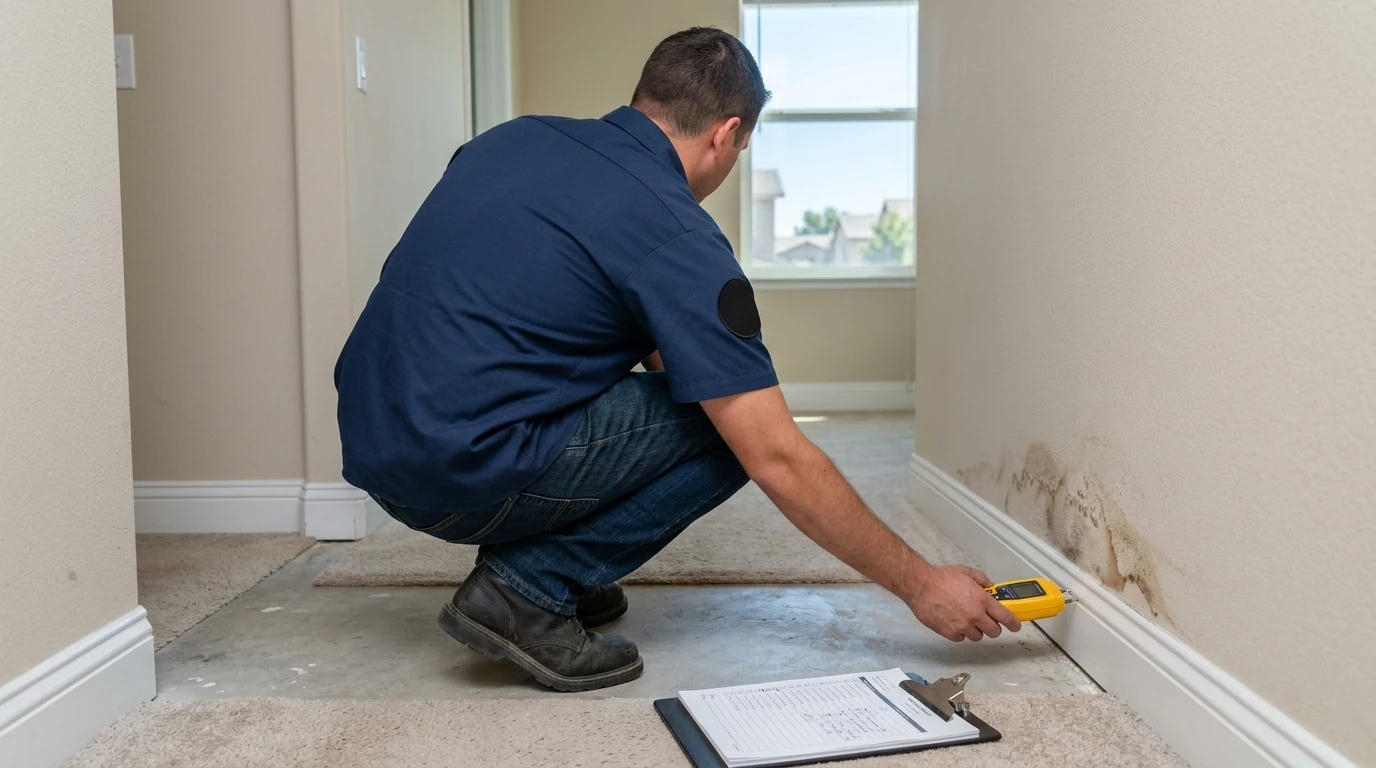
A proper inspection starts with a moisture survey of the whole affected area, not just the spot where the smell is strongest. The inspector uses a moisture meter and often a thermal camera to trace the wet path back toward its source, whether that’s a slab crack, a roof penetration, or a condensate line.
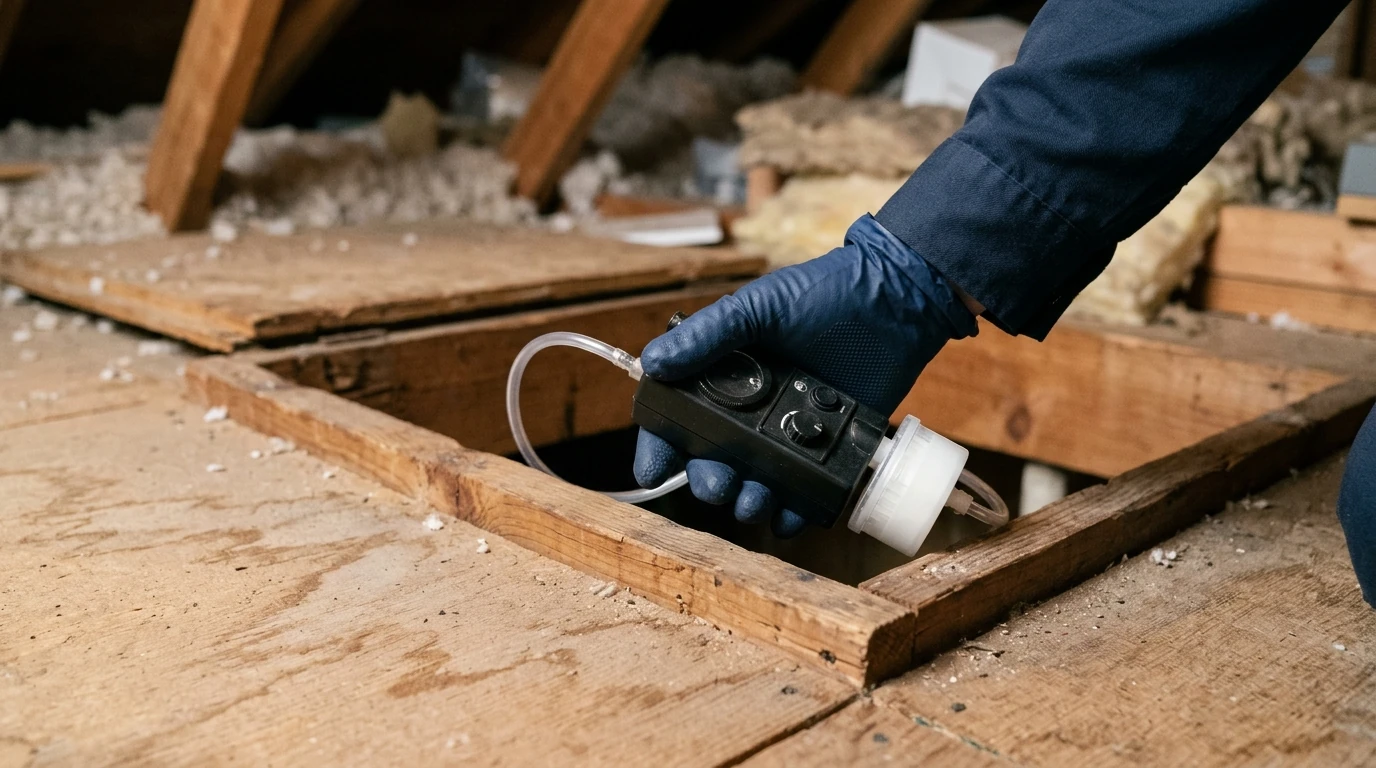
If visible growth or elevated moisture turns up, air and surface samples may be collected and sent to an independent lab, giving you a documented baseline rather than a guess. You get a written report describing what was found, where, and what remediation (if any) is recommended, which is also the documentation an insurance adjuster or a landlord will want to see.
Renting in Bakersfield and smelling something off?
Tell your landlord or property manager in writing as soon as you notice the smell, and keep a copy. Describe exactly what you smell and where, and ask for an inspection. This isn’t legal advice, California tenant rights around habitability and repairs vary by situation, so check with a tenant rights organization or attorney if your landlord doesn’t respond. A written mold inspection report is useful evidence either way.
If the smell has been around for more than a few days and you can’t find an obvious source, don’t wait for it to get worse. Call ProRestoration Services at (661) 393-9306 to schedule a mold inspection, and the same team can handle leak detection, remediation, or odor treatment once the cause is known.
About ProRestoration Services
ProRestoration Services is an IICRC Certified and EPA Lead-Safe Certified firm serving Bakersfield and Kern County, licensed under CSLB license #960566. The company works alongside its sister company, All Pro Plumbing, so leak repair, water damage restoration, and mold remediation can run under one point of contact instead of multiple contractors. ProRestoration holds a 4.8 rating across 127 Google reviews.